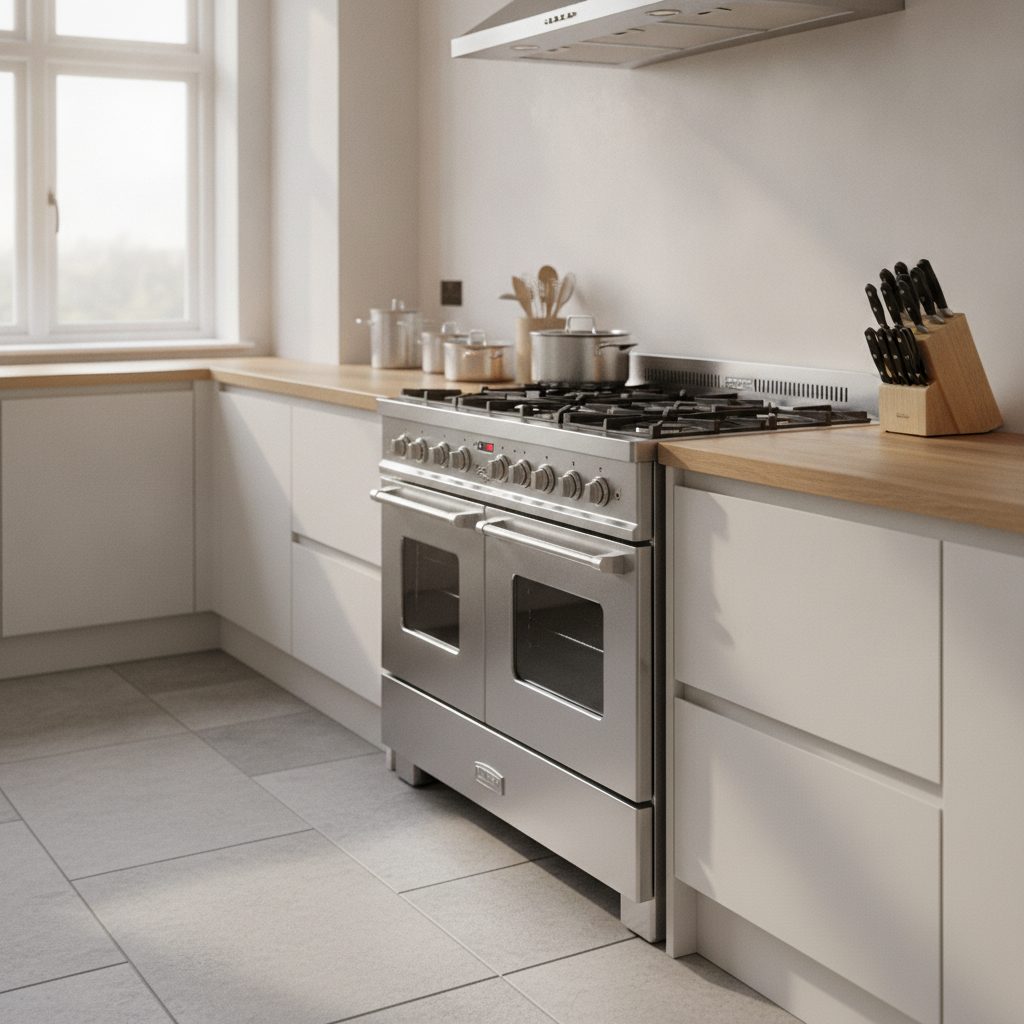
Dual Fuel Cooker Installation Near You: The Essential Pre-Fitting Checklist
Need certified help in Greater Manchester today? book gas cooker installation in Manchester

Thinking About Upgrading to a Dual Fuel Cooker? Here Is What You Must Know First
Dual fuel cookers represent the holy grail of culinary appliances for passionate home cooks. Combining the instant, visible heat control of a gas stovetop with the precise, multi-fan temperature consistency of an electric oven, they offer the best of both worlds. However, searching for dual fuel cooker installation near me often reveals that the fitting process is significantly more complex than installing a standard electric or gas-only appliance.
Need a Certified Gas Cooker or Hob Fitter in Manchester?
Skip the guesswork and book gas cooker installation in Manchester from £70 with Gas Safe registered engineers (ID: 921071). Same-day appointments with stability bracket & leak certificate.
Because dual fuel appliances draw power from two completely distinct utility supplies, installation is legally regulated and requires meticulous preparation. Before your brand-new range cooker arrives on your doorstep, use this comprehensive checklist to ensure your kitchen is fully prepared, safe, and compliant with UK building regulations.
1. Verify the Electrical Load Capacity
Many homeowners mistakenly assume a dual fuel cooker can simply be plugged into a standard 13-amp 3-pin wall socket. While a tiny minority of slimline models only require power for electric ignition and an oven light, the vast majority of dual fuel cookers feature powerful electric ovens and grills requiring a dedicated 32-amp or 45-amp radial circuit.
- Check your consumer unit (fuse box): Ensure you have an available fuse circuit capable of handling high-wattage electrical draws without tripping.
- Cooker connection unit: Your kitchen should already feature a dedicated cooker isolation switch with a red neon indicator positioned within two metres of the appliance, but not directly above the cooking surface.
2. Gas Supply and Pipe Sizing Requirements
A high-capacity dual fuel range with multiple wok burners demands an uninterrupted, properly pressured gas feed. In older properties, the existing copper gas pipe may only be 15mm in diameter. High-performance dual fuel appliances frequently require a 22mm gas line upgrade to prevent dangerous drops in gas pressure when multiple burners are lit simultaneously.
A qualified engineer will always perform a standing and working pressure test upon arrival to confirm your gas pipework meets manufacturer specifications.
3. The 'Hot Zone' and Clearance Measurements
UK safety standards enforce strict clearance rules around the hob—often called the "hot zone" or clearance corridor. To satisfy regulations and maintain fire safety:
- Vertical clearance: There must generally be a minimum clearance of 650mm to 750mm between the top of the burners and your cooker hood or wall cabinets (always consult the manufacturer manual).
- Horizontal clearance: No combustible materials—including wooden shelving, plastic sockets, or vinyl wallpaper—should encroach within 50mm to 100mm on either side of the cooking zone.
- Splashback compliance: Wall surfaces directly behind the cooker must consist of non-combustible materials such as heat-resistant tiles, glass, or stainless steel panels.
4. Legal Safety: Gas Safe Register Is Mandatory
Under UK law (Gas Safety [Installation and Use] Regulations 1998), connecting any gas appliance to a domestic gas network must strictly be carried out by an engineer registered with the Gas Safe Register. Attempting DIY work on gas lines is illegal, dangerous, and instantly invalidates your home insurance policy as well as the manufacturer warranty.
Furthermore, because dual fuel appliances cross into electrical territory, hiring a professional who understands cross-bonding, electrical testing, and gas tightness testing is essential for complete peace of mind. For comprehensive, certified assistance across Greater Manchester, you can rely on our trusted gas cooker installation service to handle the job safely from start to finish.
5. What to Expect on Installation Day
When your certified engineer arrives to complete the job, the workflow typically includes:
- Inspecting the existing supply connections and safety clearances.
- Disconnecting and capping off the redundant appliance safely.
- Installing a new BS-approved flexible gas hose and bayonet fitting.
- Securing a stability chain or stability bracket behind the cooker to prevent forward tipping.
- Hardwiring the electrical supply into the cooker connection unit.
- Conducting a full gas tightness test to check for any leaks.
- Testing burner operation, flame failure safety devices (FSD), and electrical earthing.
- Issuing an official Gas Safety Installation Certificate.
Ready to Fit Your New Cooker?
Getting your dream kitchen up and running doesn't have to be stressful. By understanding the joint electrical and gas prerequisites in advance, you can avoid costly delays on delivery day and enjoy restaurant-quality cooking right in your own home.